

Introduction
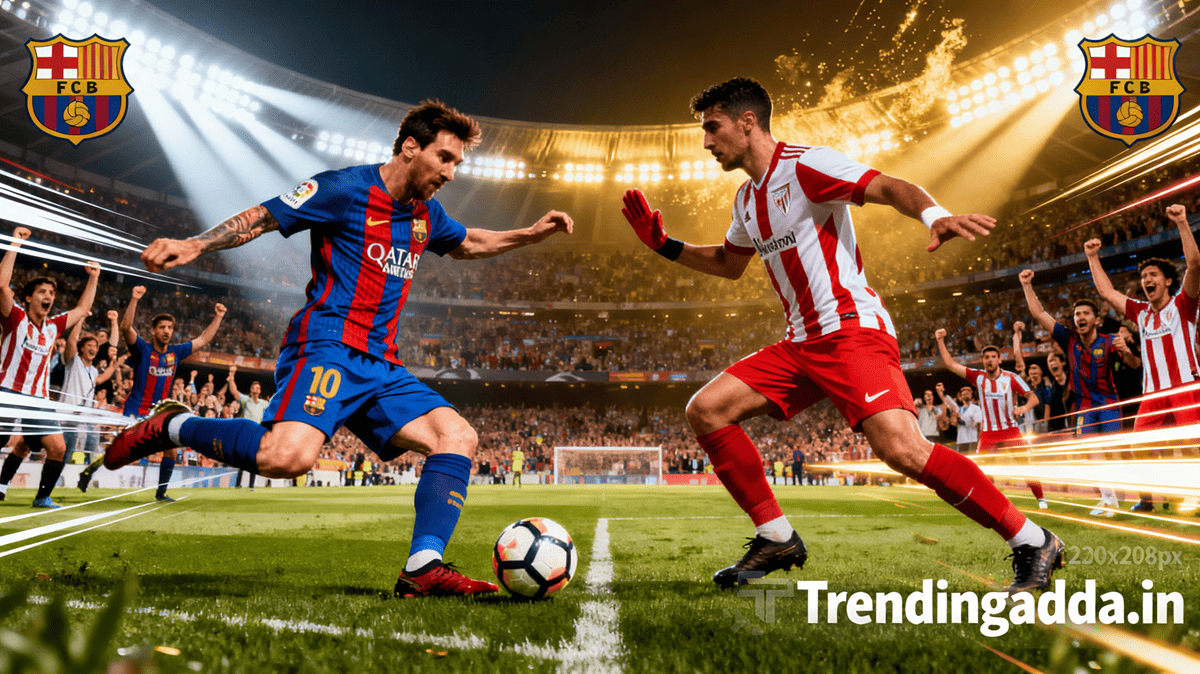
Spanish football is filled with rivalries, intense clashes, and historic match-ups, but one rivalry that stands out for its cultural depth, emotional intensity, and footballing legacy is FC Barcelona vs Athletic Club Bilbao. Unlike many modern rivalries defined by money, transfers, and social media hype, this one is a century-old clash born from regional identity, pride, resistance, and sporting excellence.
Whenever Barcelona and Athletic face each other, the match is more than just a game. It becomes a representation of:
- Catalonia vs Basque Country
- Global football vs Local pride
- La Masia academy excellence vs Basque-only Cantera tradition
- Tactical fluidity vs Physical and passionate football
This rivalry is rich with unforgettable finals, controversial moments, historic shock defeats, emotional triumphs, and memorable icons. In this detailed blog, we will go deep into:
- The history of both clubs
- Rivalry origins
- Cultural connections
- Head-to-head record
- Best matches
- Legendary players
- Tactics and playing style
- Modern era challenges
- Statistical breakdown
- Why this is one of the greatest rivalries in Spanish football
Let’s begin.
Origins of the Two Clubs
FC Barcelona
Founded in 1899 by Joan Gamper, FC Barcelona quickly became a symbol of Catalan nationalism, ambition, and footballing innovation. Barca’s early years were focused on technical dominance, creativity, and playing beautiful football.
Over the decades, Barcelona became globally famous due to:
- Johan Cruyff
- Pep Guardiola
- Lionel Messi
- La Masia
- Tiki-taka philosophy
Barca’s motto, “Més que un club” (More than a club), perfectly defines its identity — a social movement, a political statement, and a football institution.
Athletic Club Bilbao
Athletic Club was founded in 1898 and is one of the oldest clubs in Spain. What makes the club unique is its recruitment policy:
Athletic signs only Basque players born or trained in the Basque region.
This identity policy is not just tradition — it is pride, culture, and a powerful statement that even in modern football, loyalty can still win.
Because of this:
- Fans feel deeply connected to the players
- Players grow up dreaming of the club
- The identity is emotional, personal, and powerful
Athletic is also one of only three Spanish clubs never relegated from La Liga, the others being:
- FC Barcelona
- Real Madrid
Historical Rivalry – When Did It Begin?
Barcelona and Athletic Club were among the first elite teams in Spain. Their rivalry intensified because:
- They played many early Copa del Rey finals.
- They competed for national dominance in the 1900s and 1910s.
- Both had strong regional identities during the Franco dictatorship.
When Spanish politics suppressed regional languages, culture, and identity, football became the strongest medium of expression. A match between Barca and Athletic wasn’t just football — it was:
- A voice of Catalonia vs Basque resistance
- A symbolic protest
- A clash of regional pride
This emotional background formed the backbone of the rivalry.
Cultural Importance of the Rivalry
Barcelona Represents:
- Catalonia
- Open global identity
- Footballing innovation
- Technical mastery
Athletic Represents:
- Basque culture
- Community and identity
- Local loyalty
- Hard-working spirit
Both regions have strong nationalist movements and have historically faced political suppression. This makes their matches emotional not only for fans but for regions at large.
In many stadiums worldwide, people wear jerseys.
But in San Mamés or Camp Nou, people wear heritage, history, and pride.
Head-to-Head Statistics
Total Matches Played
- Over 244 matches across all competitions
Overall Record
- Barcelona Wins: ~124
- Athletic Wins: ~80
- Draws: ~40
Goals Scored
Barcelona has scored significantly more goals in the rivalry due to historically stronger attacking lineups and tactical dominance.
Rivalry in La Liga
Barcelona and Athletic compete every season in La Liga. The league matches show contrasting styles:
Barca in La Liga vs Athletic
- High possession
- Passing rhythm
- Creative midfield control
- High defensive line
Athletic in La Liga vs Barca
- Pressing intensity
- Fast transitions
- Physical duels
- Compact defensive shape
San Mamés – A Fortress
Athletic’s home ground is one of the toughest stadiums in Spain. Even the strongest Barcelona squads often struggled here due to:
- Hostile environment
- High pressing
- Energetic crowd
- Narrower field dimensions
Camp Nou
At home, Barcelona usually dominates, especially in tiki-taka and possession phases.
Copa del Rey – Where the Rivalry Grew
No competition showcases this rivalry more than the Copa del Rey. Both clubs are the top two most successful teams in the tournament’s history.
Major Finals Between Them
- 1920s–1950s: Early battles that shaped Spanish football
- 1984 Final:
Athletic 1–0 Barcelona – Maradona was involved in a post-match brawl, one of the most famous incidents in Spanish football history. - 2012 Final:
Barcelona 3–0 Athletic
Messi, Xavi, and Iniesta dominated the game. - 2015 Final:
Barcelona again won 3–1 with Messi scoring one of his greatest goals ever — dribbling past multiple players from the wing.
Why Copa Matters
Athletic, even in modern football, relies heavily on the Copa del Rey for silverware and identity pride. Reaching a final against Barcelona creates:
- Full emotional energy
- Regional spirit
- National media hype
- Historical flashbacks
It is a tournament where both teams always bring out their best fight.
Spanish Super Cup Battles
In recent years, the Spanish Super Cup has rewritten the rivalry script.
2015 Supercopa
Athletic won 5-1 on aggregate, shocking Europe.
2021 Final
Athletic beat Barcelona 3-2 in extra time, displaying determination, spirit, and resilience.
Why These Matches Matter
- These Super Cup wins proved that Athletic could defeat a more expensive and talented Barcelona squad with:
- Tactical discipline
- Physical superiority
- Emotional hunger
Biggest Shock Results in History
12–1 (1931) – Athletic destroys Barcelona
One of the biggest defeats in Barca’s history.
Messi’s Greatest Solo Goal (2015 CDR Final)
Lionel Messi dribbled past 5 Athletic players in one of the greatest individual efforts ever seen in Spain.
1984 Final Brawl
The Copa del Rey final ended in:
- Punches
- Kicks
- Maradona fighting opponents
It remains a symbolic moment of rivalry intensity.

Legendary Players Who Defined the Rivalry
For Barcelona
- Lionel Messi
Most goals in the fixture and multiple match-winning performances. - Xavi Hernández
Controlled midfield battles with calm precision. - Ronaldinho
Destroyed defenses with technique and flair. - Carles Puyol
A warrior in defense who embodied leadership.
For Athletic Club
- Telmo Zarra
One of the greatest Spanish forwards of all time. - Julen Guerrero
A symbol of Basque identity in the 90s. - Joseba Etxeberria
Spent nearly his entire career at Athletic. - Iker Muniain
A modern-era Basque icon and leader.
These players didn’t just play football — they carried their regions’ pride with them.
Playing Style Comparison
Barcelona’s Tactical Identity
Barca remains one of the most unique tactical clubs in football history.
Core Principles
- Control the ball
- Control the game
- Break opponents with passing
- Press high immediately after losing the ball
Under Different Managers
- Cruyff: Introduced total football
- Guardiola: Perfected tiki-taka
- Luis Enrique: Blended direct attacking with positional play
- Xavi (as coach): Attempted to bring philosophy back
Athletic’s Tactical Identity
Athletic represents the Spanish school of pressing, intensity, and warrior-like football.
Core Principles
- High pressing
- Strong work ethic
- Winning second balls
- Fast wide attacks
- Set-piece threat
This makes matches against Barcelona stylistically beautiful:
- Technique vs intensity
- Elegant possession vs Physical battle
- Long possession phases vs Quick transitions
Modern Era Challenges
Barcelona
After the departure of Lionel Messi, Barcelona faced:
- Financial instability
- Squad rebuilding
- Pressure on young talents
- Transfer market limitations
However, the club still focused on:
- La Masia prospects
- European comeback
- Maintaining possession-based football identity
Athletic Club
Athletic’s challenge is different – with their Basque-only policy, recruitment options are limited. This means:
- Player development is everything
- Coaches must adjust tactically
- Youth scouting is crucial
- Basque derbies and Barcelona matches become motivation
Despite limitations, Athletic continues to:
- Finish high in league positions
- Reach Copa del Rey finals
- Beat big teams
Their consistency makes them one of football’s greatest identity success stories.
Recent Meetings – Summary
Recent encounters have included:
- Barcelona dominance in several league meetings
- Athletic victories in Super Cup and cup matches
- Tight, emotional contests at San Mamés
- Young stars like Nico Williams and Pedri shaping new narratives
The rivalry is very much alive and evolving.
The Fans’ Perspective
Barcelona Fans
- Expect beautiful football
- Demand control and attacking style
- Treat big games with Athletic as heritage matches
Athletic Fans
- Carry unmatched emotional connection
- See every big match as a fight for identity
- Often create one of the best stadium atmospheres in Europe
For neutrals, this rivalry is exciting because:
- Stadiums are full
- Matches are intense
- History is always present
Why This Rivalry Stands Out in World Football
Here are the reasons why Barcelona vs Athletic Club is one of the most special rivalries in football:
1. Pure Identity
No money, transfers, or artificial hype.
Just history, loyalty, and tradition.
2. Two Football Philosophies
- Positional play
- Pressing and counter-attacks
3. Shared Dominance in Copa del Rey
For over 100 years, these two clubs shaped the cup competition.
4. Legendary Players
From Zarra to Messi, many greats dominated the fixture.
5. Emotional and Cultural Value
Fans don’t watch this match as a game — they watch it as regional representation.
6. A Rivalry Without Hate
Unlike some derbies filled with animosity, this rivalry is built on:
- Mutual respect
- Shared history
- Passionate competition
Future of the Rivalry
Future seasons promise:
- Rising talents
- Tactical evolution
- More electrifying clashes
- New historic finals
Young stars like:
- Pedri
- Gavi
- Nico Williams
- Sancet
- Yamal
are shaping a new era of the rivalry.
Conclusion
Barcelona vs Athletic Club is not just a match — it is a century-long story of culture, pride, football identity, and unforgettable moments. From 1930s battles to Messi magic, from Basque pride to Catalan passion, this rivalry continues to deliver:
- Drama
- Emotion
- Tactical battles
- Cup classics
- Historic upsets
As football becomes increasingly commercial, this rivalry reminds the world that some matches still carry soul, history, and meaning.
No matter the competition — La Liga, Copa del Rey, or Supercopa — when Barcelona meets Athletic Club, fans know one thing:
It will always be a match worth remembering
Disclaimer
The information in this blog about the Barcelona vs Athletic Club match is based on match reports, publicly available statistics, and football analysis. We do not claim ownership of any team logos, images, or trademarks mentioned. All details are presented for educational, informational, and sports journalism purposes only. Match statistics may vary based on updated official records. Readers are advised to verify information from official club sources for the most accurate data.




 binance Sign Up says:
  创建免费账户 says:
  www.annunciogratis.net says:
  www.fightdynasty.com says:
  skapa binance-konto says: