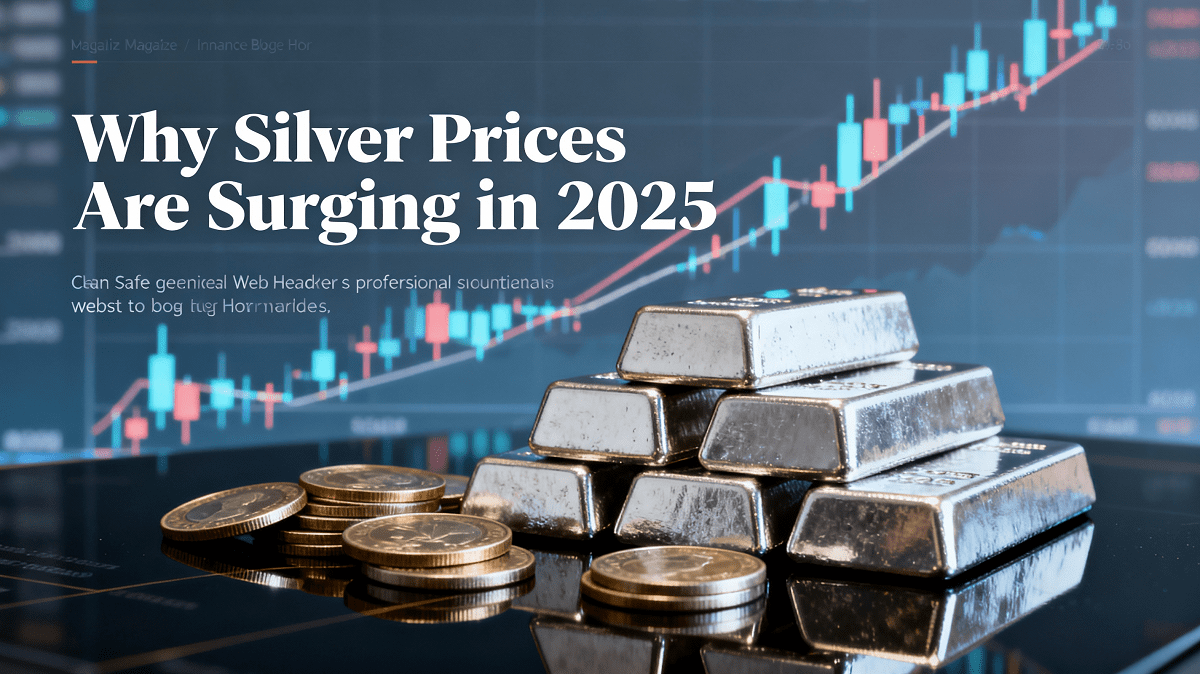

Silver, once viewed primarily as a decorative and cultural metal, has now become a strategic resource powering some of the world’s most critical industries. Its price movement in recent years — and particularly in 2024–2025 — reflects a deeper economic transformation rather than a short-term market fluctuation. As the global economy evolves, silver is positioned at the intersection of technology, energy, and investment behavior, making its rising price a logical outcome of multiple converging trends.
This article explores the real, structural reasons behind the rise in silver prices, explained in a clear, authoritative, and professional tone.
1. A Multi-Industry Metal in an Expanding Global Economy
Unlike gold, which is driven primarily by investment sentiment, silver carries a unique dual identity:
it is both a precious metal and an industrial necessity.
Today, silver is essential in:
- Renewable energy systems
- Electric vehicles
- Consumer electronics
- Medical technology
- Semiconductor components
- Communication hardware
As economies push toward digital adoption, clean energy, and electrification, silver’s industrial role has become more central than ever before. This sharp and sustained growth in industrial consumption forms the backbone of its long-term price rise.
2. The Impact of Solar and Green Energy Expansion
No sector has influenced silver demand as dramatically as the solar energy industry. Silver is a core component of photovoltaic (PV) cells, and global solar installations have been increasing at record speed.
Governments worldwide — from India to China to the United States — are investing heavily in large-scale solar infrastructure. Each new solar panel requires silver, and as renewable energy commitments intensify, the demand for silver naturally increases.
This connection has fundamentally changed the long-term demand profile of the metal, making silver not just valuable but strategically indispensable.
3. Supply Constraints: Mining Cannot Keep Up
While demand accelerates every year, supply growth remains structurally limited.
Silver is rarely mined alone.
It is typically produced as a by-product during the extraction of other metals like copper, lead, zinc, and gold.
This means silver production cannot simply expand because prices rise — mining companies prioritize the primary metals, not silver.
As a result, the global silver market has experienced recurring supply deficits.
When a material faces rising demand and constrained supply, price appreciation becomes practically unavoidable.
4. Investors Now View Silver as a Safe-Haven Alternative
Geopolitical tension, inflation concerns, and economic uncertainty have pushed investors toward precious metals. But with gold at extremely elevated levels, many investors — especially in emerging markets — have shifted their attention to silver.
Silver offers:
- Lower entry cost
- Strong industrial backing
- Historical store-of-value appeal
- Higher potential volatility (which traders prefer)
This dual nature — industrial strength and investment appeal — has amplified buying momentum.
The result is consistent upward pressure on prices.
5. India’s Domestic Price Rise: Currency and Import Dynamics
India, being one of the largest consumers of silver, imports a significant portion of its requirement. This makes domestic prices sensitive to two things:
- USD–INR exchange rate
- Import duties and premiums
If the rupee weakens against the dollar, the cost of importing silver rises — even if global prices remain unchanged. This is one major reason Indian silver prices sometimes rise faster than the international market.
Local demand during festivals, traditional investment seasons, and wedding periods further intensifies price pressure.
6. Physical Silver Tightness in the Market
In several regions, physical silver availability has tightened. When jewellers, bullion traders, or industrial users find it difficult to secure silver at expected quantities, they pay premiums over the base rate.
Premiums create a psychological effect as well.
When the market hears the word “shortage”, retail buyers tend to enter aggressively, pushing prices even higher.
7. The Trend Perspective: A Multi-Year Climb
Silver’s rise did not happen overnight.
The upward trend has been building over several years:
- The pandemic accelerated digital and tech demand.
- Global infrastructure spending rose.
- Renewable energy became a non-negotiable global priority.
- Investors searched for safe alternatives amid economic uncertainty.
All these factors compounded year after year until the pressure became visible in the form of a strong, sustained price surge.
Will Silver Prices Fall? A Balanced View
No commodity moves upward indefinitely. Silver will experience corrections — sometimes sharp ones — because the metal is historically volatile.
However, its long-term foundation remains strong.
Prices may fall when:
- Mining production increases
- Industrial demand slows
- Interest rates rise
- Investor sentiment cools
Prices may rise further when:
- Solar and EV sectors expand
- Geopolitical risks escalate
- The US dollar weakens
- Supply deficits widen
In other words, the long-term trend for silver remains upward, but short-term fluctuations are always part of the market.
Conclusion
Silver’s rising price is a reflection of deeper economic and technological shifts.
It is not simply a commodity reacting to temporary market hype.
It is a metal at the heart of one of the world’s most important transitions — the move toward clean energy, electrification, and high-performance technology.
With structural demand growing, limited mining output, strong investor interest, and currency-driven domestic pressures, silver’s path forward remains firmly supported by real fundamentals.
Disclaimer
The information provided in this article is for educational and informational purposes only and should not be considered as financial, investment, or trading advice. Silver prices are volatile and can change rapidly due to market conditions, global events, and economic factors.
Readers should conduct their own research and consult with a licensed financial advisor before making any investment or trading decisions related to silver or other commodities. The author and website are not responsible for any financial losses incurred based on the information presented here.
Past trends and historical data do not guarantee future results. All figures and prices mentioned are indicative and may vary based on market conditions and regional factors.



 binance registrieren says:
  create binance account says: