
Creating a monthly budget sounds simple, but in real life, most budgets fail within the first few weeks. The reason is not lack of income—it is lack of a realistic system. A budget that actually works is flexible, practical, and designed for real Indian lifestyles.
This complete guide will help you understand how to create a monthly budget that actually works, even if you have a low salary, irregular income, family responsibilities, or past failures with budgeting.
Why Most Monthly Budgets Fail (The Hard Truth)
Before learning how to build a working budget, you must understand why most people fail.
Common Reasons Budgeting Fails in India
- Unrealistic expense limits
- Ignoring festivals, weddings, and emergencies
- Not tracking small daily expenses
- Depending only on willpower
- Copying foreign budgeting rules blindly
A budget fails not because you are bad with money, but because the system is wrong.
What Is a Monthly Budget?
A monthly budget is a money plan that tells your income where to go before you spend it. It divides your salary into:
- Essentials (needs)
- Lifestyle expenses (wants)
- Savings and investments
If you don’t control your money, your money will control you.
Step 1: Know Your Real Monthly Income
Start with your actual take-home income, not CTC.
Include:
- Salary after tax
- Side income
- Freelance income (average)
Exclude:
- Bonuses (treat as extra)
- Irregular income
Indian Example: Rohit earns ₹35,000 salary + ₹3,000 side income. His budget income = ₹38,000, not CTC.
Step 2: List Your Essential Expenses First
Essentials are expenses you cannot avoid.
Essential Expenses in India
- Rent / Home EMI
- Groceries
- Electricity & water bills
- Mobile & internet
- Transport
- School fees
- Medicines & insurance
If essentials are not covered, no budget will ever work.
Step 3: Track Where Your Money Actually Goes
For one full month, track every rupee.
Daily Expenses That Destroy Budgets
- Tea & snacks
- Online food orders
- Auto/cab rides
- Impulse shopping
Real-Life Example: Priya thought she spent ₹2,000 on food outside. Tracking showed ₹4,800.
What gets measured gets controlled.
Step 4: Use a Simple Budget Rule (Indian-Friendly)
Instead of rigid foreign rules, use a flexible Indian model.
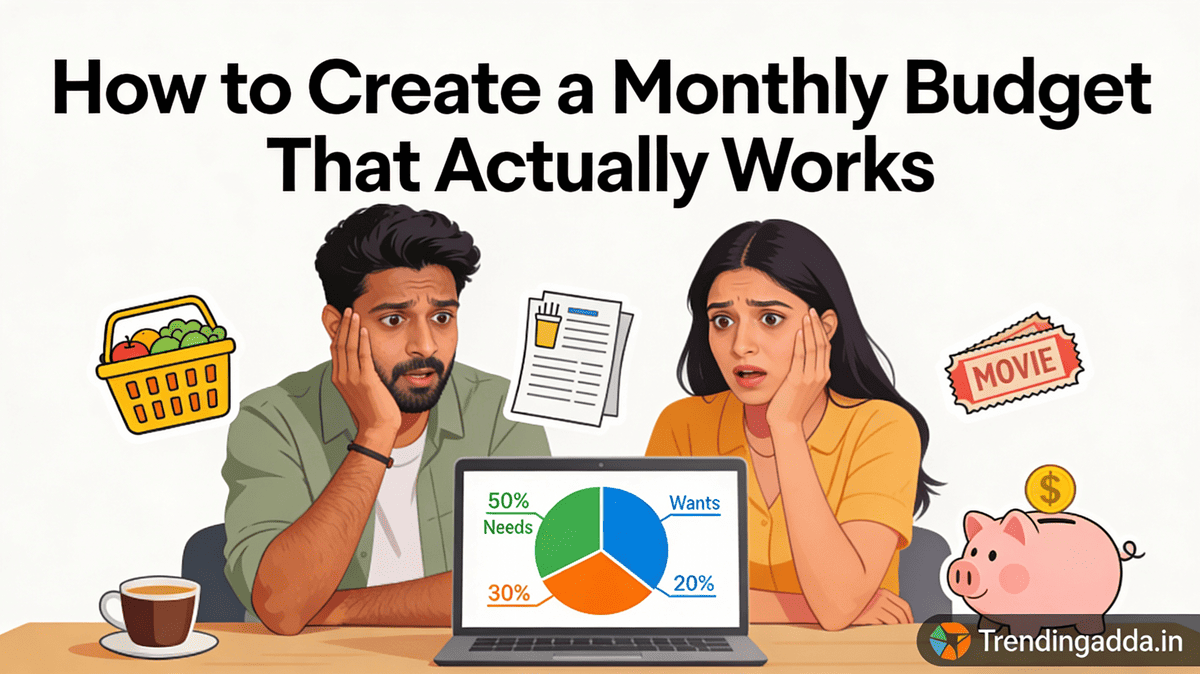
The 50–30–20 Rule (Modified for India)
- 50–55% Needs
- 25–30% Wants
- 15–20% Savings
If salary is low, even 5–10% savings is powerful.
Step 5: Create Your Monthly Budget Table
Sample Monthly Budget (₹30,000 Salary)
| Category | Amount (₹) |
|---|---|
| Rent | 8,000 |
| Groceries | 4,000 |
| Transport | 2,000 |
| Bills | 1,500 |
| Lifestyle | 4,000 |
| Savings | 3,500 |
| Emergency Fund | 2,000 |
| Buffer | 5,000 |
Always keep a buffer. Life is unpredictable.
Step 6: Pay Yourself First (The Golden Rule)
Savings should happen before spending, not after.
How to Do It
- Auto-transfer savings on salary day
- Separate savings account
What you save first, you never miss.
Step 7: Make Your Budget Flexible
A budget should bend, not break.
Flexible Budget Tips
- Increase lifestyle budget occasionally
- Adjust during festivals
- Rebalance monthly
A strict budget breaks. A flexible budget survives.
Monthly Budget Calculator Table (India)
📌 Step 1: Enter Your Monthly Income
👉 Net salary (after tax): ₹________
📊 Monthly Budget Calculator (Editable)
| Category | Percentage | Amount (₹) |
|---|---|---|
| Needs (Rent, Food, Bills) | 50–55% | ₹ ______ |
| Wants (Lifestyle, Fun) | 25–30% | ₹ ______ |
| Savings & Investments | 15–20% | ₹ ______ |
| Emergency Fund | 5–10% | ₹ ______ |
| Buffer / Miscellaneous | 5% | ₹ ______ |
| Total | 100% | ₹ ______ |
✅ Buffer is important for Indian expenses like festivals, guests, medical, repairs.
🧮 Example Budget Calculation (₹30,000 Salary)
| Category | Percentage | Amount (₹) |
|---|---|---|
| Needs | 52% | ₹15,600 |
| Wants | 25% | ₹7,500 |
| Savings | 13% | ₹3,900 |
| Emergency Fund | 7% | ₹2,100 |
| Buffer | 3% | ₹900 |
| Total | 100% | ₹30,000 |
🧮 Low Salary Budget Example (₹18,000 Salary)
| Category | Amount (₹) |
|---|---|
| Needs | ₹10,000 |
| Wants | ₹3,000 |
| Savings | ₹2,000 |
| Emergency Fund | ₹1,000 |
| Buffer | ₹2,000 |
| Total | ₹18,000 |
Yearly Budget Planner Table (India-Friendly)
| Month | Income (₹) | Needs (₹) | Wants (₹) | Savings (₹) | Emergency Fund (₹) | Buffer / Misc (₹) | Total Expenses (₹) | Surplus / Deficit (₹) |
|---|---|---|---|---|---|---|---|---|
| January | 30,000 | 15,600 | 7,500 | 3,900 | 2,100 | 900 | 29,900 | +100 |
| February | 30,000 | 15,600 | 7,500 | 3,900 | 2,100 | 900 | 29,900 | +100 |
| March | 30,000 | 15,600 | 7,500 | 3,900 | 2,100 | 900 | 29,900 | +100 |
| April | 30,000 | 15,600 | 7,500 | 3,900 | 2,100 | 2,000* | 31,100 | -1,100* |
| May | 30,000 | 15,600 | 7,500 | 3,900 | 2,100 | 900 | 29,900 | +100 |
| June | 30,000 | 15,600 | 7,500 | 3,900 | 2,100 | 900 | 29,900 | +100 |
| July | 30,000 | 15,600 | 7,500 | 3,900 | 2,100 | 900 | 29,900 | +100 |
| August | 30,000 | 15,600 | 7,500 | 3,900 | 2,100 | 2,000* | 31,100 | -1,100* |
| September | 30,000 | 15,600 | 7,500 | 3,900 | 2,100 | 900 | 29,900 | +100 |
| October | 30,000 | 15,600 | 7,500 | 3,900 | 2,100 | 2,000* | 31,100 | -1,100* |
| November | 30,000 | 15,600 | 7,500 | 3,900 | 2,100 | 900 | 29,900 | +100 |
| December | 30,000 | 15,600 | 7,500 | 3,900 | 2,100 | 2,000* | 31,100 | -1,100* |
Note: Buffer is increased in festival months (April, August, October, December) to cover gifts, travel, weddings, and festivals.
⚡ How to Use Yearly Budget Planner
- Enter actual income for each month.
- Adjust needs, wants, savings according to seasonal changes.
- Allocate extra buffer for festivals or unexpected expenses.
- Check surplus/deficit monthly — helps to plan side income or cut costs.
- Update emergency fund monthly until target is reached.
Indian Real-Life Example: Budget on Low Salary
Amit (Age 26, Office Assistant, ₹18,000 salary)
- Saved ₹1,000 monthly
- Reduced outside food
- Built emergency fund in 1 year
Low income is not an excuse. No plan is.
Common Budgeting Mistakes to Avoid
- No emergency fund
- Ignoring irregular expenses
- Overestimating discipline
- No tracking
Budgeting for Families vs Singles
Singles
- Focus on savings & skill growth
Families
- Higher emergency fund
- Education & medical buffer
Budgeting Tools You Can Use
- Excel / Google Sheets
- Notes app
- Budget apps
- Plain diary
Tool doesn’t matter. Consistency does.
How Long Before a Budget Starts Working?
Usually 2–3 months.
First month = awareness Second month = adjustment Third month = control
How to Fix a Budget That Is Failing
- Reduce lifestyle slowly
- Increase income
- Re-check essentials
- Add buffer
Psychology of Budgeting
People fail because budgeting feels restrictive.
Budgeting is not punishment. It is permission to spend wisely.
Budget vs Saving vs Investing
- Budget = plan
- Saving = protection
- Investing = growth
All three are necessary.
Monthly Budget Checklist
- Know income
- Track expenses
- Set limits
- Automate savings
- Review monthly
Final Thoughts
A monthly budget that actually works is not perfect—it is practical.
Start small. Stay consistent. Improve monthly.
You don’t need more money. You need a better system.
Disclaimer
This article is for educational purposes only and should not be considered financial or investment advice. Readers should consult a qualified financial advisor before making any financial decisions. TrendingAdda.in is not responsible for any financial loss arising from using this information.