
India–US Trade Deal Changes the Global Tariff Game: Why India Is Suddenly at an Advantage
India’s newly announced trade agreement with the United States has quietly but decisively reshaped the global tariff landscape. After months of uncertainty and tense negotiations, New Delhi has emerged in a far stronger position compared to many of the world’s major export economies.
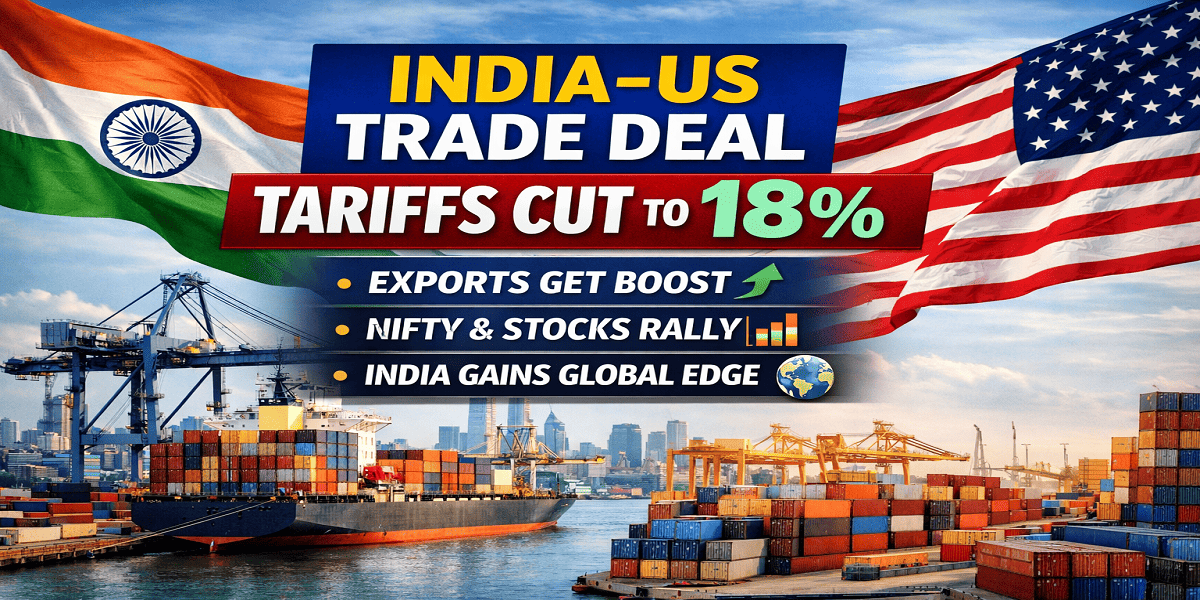
Following a phone conversation between US President Donald Trump and Prime Minister Narendra Modi, Washington confirmed that tariffs on Indian goods will be slashed to 18 percent, down sharply from the earlier effective rate of 50 percent. For Indian exporters, this marks a major turning point.
What Changed in the Tariff Structure?
Until now, Indian exports to the US were burdened by two layers of duties. The first was a 25 percent reciprocal tariff, and the second was a 25 percent punitive levy imposed over India’s purchase of Russian crude oil. Together, these made India one of the most heavily taxed exporters to the US market.
With the new agreement, the punitive tariff linked to Russian oil imports has been withdrawn, and the base reciprocal tariff has been reduced. The result is a clean, single tariff of 18 percent, dramatically improving India’s competitive position.
Trump’s Announcement and Strategic Signals
Announcing the deal on Truth Social, President Trump described his conversation with Prime Minister Modi as warm and productive. He said the two leaders discussed trade, global security, and efforts to end the Russia-Ukraine conflict.
Trump also claimed that India had agreed to reduce purchases of Russian oil and increase imports from the US, and potentially Venezuela. While the finer details of energy commitments are still awaited, the trade outcome itself is clear and immediate.
According to Trump, the tariff reduction was agreed upon “out of friendship and respect” for Prime Minister Modi, and the new rates took effect right away.
How India Compares Globally Now
With an 18 percent tariff, India now sits in a far more favorable position than many competing exporters:
- Brazil faces duties as high as 50 percent
- China continues to deal with tariffs around 37 percent
- South Africa is taxed at 30 percent
- Canada and Mexico face rates of 25 percent
- Bangladesh and Vietnam remain in the 20 percent bracket
- Pakistan, Malaysia, Thailand, and Cambodia face around 19 percent
Only a small group of advanced economies enjoy lower tariffs than India. These include the European Union, Japan, South Korea, and Switzerland at 15 percent, while the United Kingdom stands at just 10 percent.
This shift places India firmly in the upper tier of preferred US trading partners.
Modi’s Response: A Boost for “Made in India”
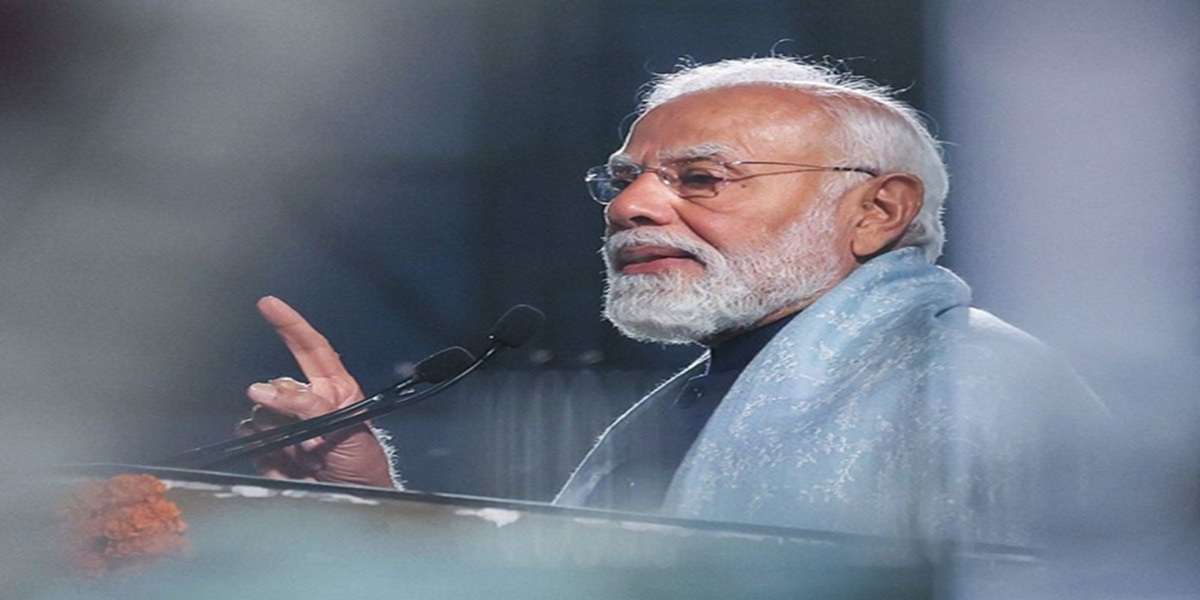
Prime Minister Narendra Modi welcomed the announcement, calling it a major positive for Indian manufacturing and exporters. In a post on X, he said he was delighted that “Made in India products” would now face significantly lower tariffs in the US.
He emphasized that closer cooperation between the world’s two largest democracies would unlock new opportunities and benefit people on both sides. Modi also praised Trump’s leadership and expressed optimism about taking the bilateral partnership to new heights.
Strong Reactions from the Indian Government
Senior Indian ministers have described the deal as a strategic breakthrough.
Commerce and Industry Minister Piyush Goyal said the agreement would open new doors for farmers, MSMEs, entrepreneurs, and skilled workers, while strengthening the Make in India initiative.
External Affairs Minister S. Jaishankar, currently visiting the US, said the deal would deepen economic ties, create jobs, spur growth, and promote innovation in both economies. He also highlighted its role in strengthening trusted technology partnerships.
What This Means for Indian Exporters
For Indian exporters, the tariff reset is nothing short of a relief. Industries such as:
- Textiles and garments
- Seafood and agro-exports
- Chemicals and specialty chemicals
- Engineering goods
- Gems and jewellery
are expected to benefit the most. Many of these sectors operate on thin margins, where even a 2–5 percent tariff difference can determine whether an exporter wins or loses an order.
Compared to rivals like China, Bangladesh, and Pakistan, Indian exporters now enjoy a clear cost advantage in the US market. Analysts believe this could help India regain lost market share and attract fresh investment into manufacturing and export-oriented sectors.
A Strategic Upgrade in the Global Tariff Hierarchy
While the technical details of the trade agreement will continue to evolve, the immediate impact is unmistakable. In the global tariff hierarchy, India has moved decisively upward.
From being one of the most penalized exporters, India is now better placed than most emerging and even several developed economies when it comes to access to the US market.
Market Impact: What the India–US Trade Deal Means for Markets & Stocks
The sharp reduction in US tariffs on Indian goods to 18% has delivered an immediate confidence boost to Indian financial markets. Investors are pricing in stronger export competitiveness, improved earnings visibility, and renewed foreign interest, especially in export-heavy sectors.


📈 Nifty & Broader Market Outlook
The trade deal is structurally positive for the Nifty 50 as it strengthens India’s global trade positioning at a time when many competing economies face higher tariffs. Export-oriented stocks, logistics players, and manufacturing-linked companies are expected to drive incremental upside in benchmark indices over the medium term.
Analysts believe the agreement reduces downside risk for Indian equities by improving demand visibility from the US — India’s largest export destination.
💻 IT Sector: Margin Relief & Demand Stability
Indian IT companies stand to benefit indirectly from the deal. While software services are not directly tariffed, improved India–US relations and a stable trade environment support long-term deal pipelines, especially in BFSI, healthcare, and manufacturing clients.
Large-cap IT stocks may see valuation comfort rather than sharp rallies, but reduced geopolitical friction helps sustain USD revenue stability.
💊 Pharma: Strong Export Advantage
The pharmaceutical sector is among the biggest beneficiaries. With India now enjoying a tariff advantage over China and several emerging markets, Indian drug makers gain better pricing power and smoother access to the US market.
API manufacturers, generic drug exporters, and specialty pharma players could see volume growth and margin expansion, especially in regulated markets.
🧵 Export-Driven Sectors: Clear Winners
The most direct gains are expected in:
- Textiles & apparel
- Seafood & agro exports
- Chemicals & specialty chemicals
- Engineering goods
- Gems & jewellery
Market Impact: What the India–US Trade Deal Means for Markets & Stocks
The sharp reduction in US tariffs on Indian goods to 18% has delivered an immediate confidence boost to Indian financial markets. Investors are pricing in stronger export competitiveness, improved earnings visibility, and renewed foreign interest, especially in export-heavy sectors.
📈 Nifty & Broader Market Outlook
The trade deal is structurally positive for the Nifty 50 as it strengthens India’s global trade positioning at a time when many competing economies face higher tariffs. Export-oriented stocks, logistics players, and manufacturing-linked companies are expected to drive incremental upside in benchmark indices over the medium term.
Analysts believe the agreement reduces downside risk for Indian equities by improving demand visibility from the US — India’s largest export destination.
💻 IT Sector: Margin Relief & Demand Stability
Indian IT companies stand to benefit indirectly from the deal. While software services are not directly tariffed, improved India–US relations and a stable trade environment support long-term deal pipelines, especially in BFSI, healthcare, and manufacturing clients.
Large-cap IT stocks may see valuation comfort rather than sharp rallies, but reduced geopolitical friction helps sustain USD revenue stability.
💊 Pharma: Strong Export Advantage
The pharmaceutical sector is among the biggest beneficiaries. With India now enjoying a tariff advantage over China and several emerging markets, Indian drug makers gain better pricing power and smoother access to the US market.
API manufacturers, generic drug exporters, and specialty pharma players could see volume growth and margin expansion, especially in regulated markets.
🧵 Export-Driven Sectors: Clear Winners
The most direct gains are expected in:
- Textiles & apparel
- Seafood & agro exports
- Chemicals & specialty chemicals
- Engineering goods
- Gems & jewellery
Disclaimer
The information provided in this article is for educational and informational purposes only. It does not constitute investment, financial, legal, or trading advice. Market views and sector impacts are based on publicly available information and expert opinions at the time of writing. Stock market investments are subject to market risks, and readers are advised to conduct their own research or consult a SEBI-registered financial advisor before making any investment decisions. The website and author shall not be responsible for any financial losses arising from the use of this information.
Source: Public reports and market data