

India–US Trade Deal: From Tension to Trust in One Phone Call
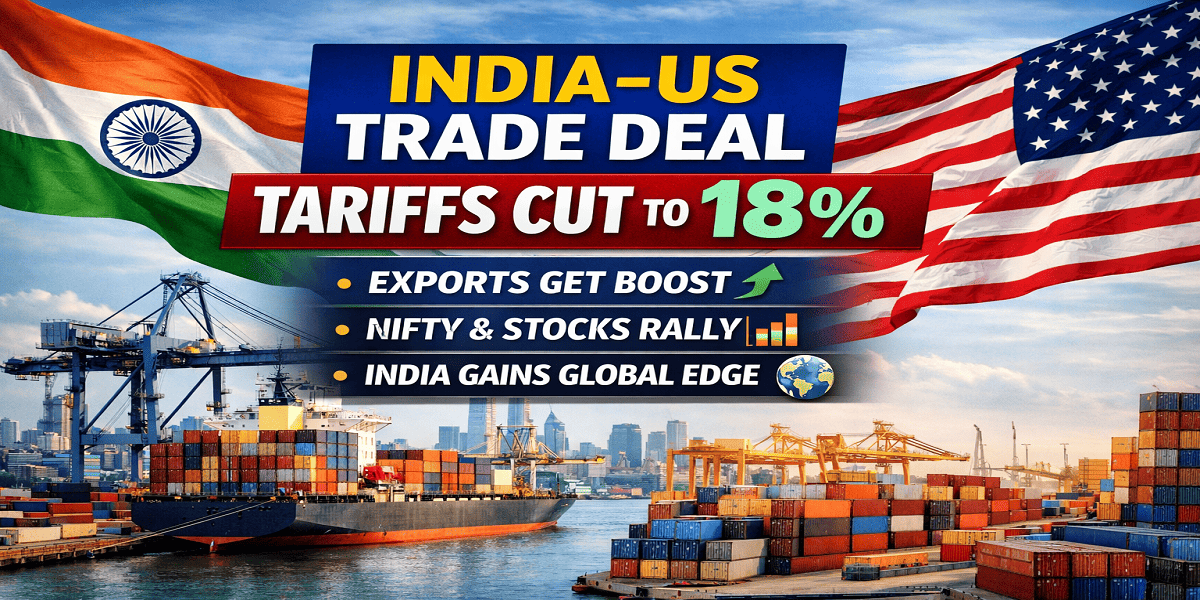
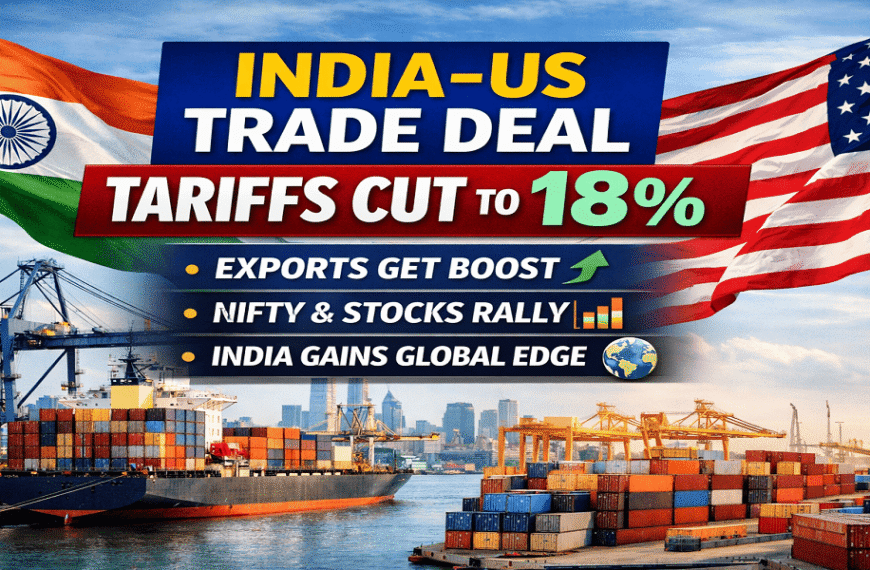
After nearly 11 months of uncertainty, tension, and stalled talks, India and the United States have finally turned a difficult chapter into a positive one. On Monday, both countries agreed to a historic trade deal that dramatically reduces US tariffs on Indian goods — from a punishing 50% to just 18%.
For Indian exporters, businesses, and policymakers, this is not just a tariff cut — it’s a huge relief and a clear signal that India–US relations are back on track.
How Bad Things Had Gotten
Over the past year, India faced the highest US tariff rate in the world. Two reasons were officially cited by Washington:
- 25% penalty for India buying Russian oil
- 25% reciprocal tariffs under US trade rules
This meant Indian products became far more expensive in the US compared to goods from countries like Vietnam, Bangladesh, and Pakistan. As a result, Indian exporters lost competitiveness, and trade momentum slowed sharply.
Talks dragged on for months, often moving forward one week and stalling the next. Meanwhile, trust between the two governments weakened — especially after US President Donald Trump repeatedly claimed he had brokered a ceasefire between India and Pakistan, a claim firmly rejected by New Delhi.
The Turning Point: Modi–Trump Conversation
Everything changed late Monday evening.
At around 9:16 pm IST, the newly appointed US Ambassador to India, Sergio Gor, posted a cryptic message on X:
“President Trump just spoke with Prime Minister Modi. STAY TUNED…”
Just over an hour later, President Trump made the big announcement on Truth Social.
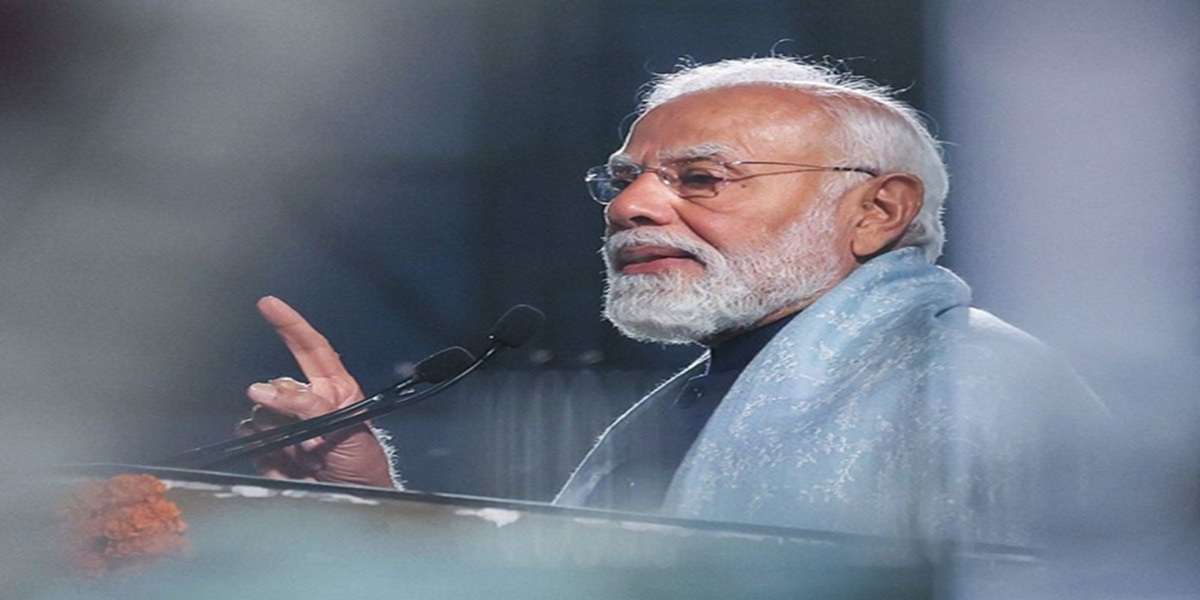
He revealed that the United States would immediately lower tariffs on Indian goods to 18%, calling Prime Minister Modi “one of my greatest friends” and praising his leadership.
For the first time in months, there was visible warmth in official communication between the two leaders.
What Trump Said — In Simple Words
President Trump highlighted three key points:
- The long-pending India–US trade deal is finally agreed
- India will reduce tariffs and non-tariff barriers on American goods
- India will significantly increase purchases of US energy, technology, agriculture, and coal, aiming toward a $500 billion trade relationship
He also stated that the 25% penalty linked to Russian oil purchases has been dropped, confirming a major policy shift.
Modi’s Response: Diplomatic, Calm, Strategic
Prime Minister Narendra Modi welcomed the announcement and thanked President Trump for reducing tariffs on “Made in India” products.
He emphasized:
- Strong friendship between India and the US
- Shared democratic values
- Commitment to peace, stability, and global prosperity
Notably, Modi did not publicly comment on oil-related commitments, maintaining India’s traditional diplomatic balance. However, data already shows that India’s imports of Russian oil have been steadily declining due to sanctions, market pressures, and political costs.
Why This Deal Matters So Much
This agreement is important for several reasons:
✅ For India
- Indian exports become far more competitive in the US
- Businesses regain confidence after months of uncertainty
- Strengthens India’s global trade position
- Reinforces India’s image as a reliable long-term partner
✅ For the US
- Expands access to India’s massive market
- Strengthens supply chains outside China
- Deepens strategic influence in the Indo-Pacific region
Perfect Timing on the Global Stage
The deal comes at a critical moment:
- India–EU trade talks concluded just last week
- Global supply chains are being redesigned
- The US is pushing for trusted partners in critical minerals, energy, and technology
External Affairs Minister S Jaishankar’s visit to Washington this week is expected to formally push the deal through legal and administrative steps.
Market Impact: What This India–US Trade Deal Means for Stocks
The sharp cut in US tariffs from 50% to 18% is not just a diplomatic win — it has direct stock market implications, especially for export-driven sectors. Here’s how different parts of the market are likely to react.
📊 IT Stocks: Biggest Immediate Beneficiaries
Indian IT companies earn 50–60% of their revenue from the US market, making them one of the largest winners of this deal.
Why IT benefits:
- Lower tariffs improve client sentiment in the US
- Better deal visibility encourages long-term contracts
- Reduced trade uncertainty supports valuation expansion
Stocks to watch:
- TCS
- Infosys
- Wipro
- HCL Technologies
- LTIMindtree
Market view:
This deal reduces geopolitical risk for IT exporters. Expect renewed buying interest, especially if the rupee remains stable.
💊 Pharma Stocks: Margin Relief & Volume Growth
Indian pharmaceutical exports to the US had come under pressure due to rising compliance costs and trade barriers. Lower tariffs help restore competitiveness.
Why pharma gains:
- Lower cost of entry into the US market
- Improved margins for generic drug exporters
- Better pricing power against global peers
Stocks to watch:
- Sun Pharma
- Dr Reddy’s Laboratories
- Cipla
- Lupin
- Aurobindo Pharma
Market view:
Pharma stocks could see gradual accumulation, especially companies with strong USFDA compliance records.


🏭 Export-Oriented Sectors: Sentiment Booster
Beyond IT and pharma, the tariff cut improves prospects for:
- Engineering goods
- Auto components
- Chemicals
- Textiles
- Electronics manufacturing
Lower tariffs help Indian exporters regain lost market share in the US, which had shifted to cheaper alternatives over the past year.
Market view:
Mid-cap and small-cap export companies may see selective rallies, driven by order flow improvement.
📈 Nifty 50 & Broader Market Impact
From a broader market perspective, the deal:
- Reduces India’s global trade risk premium
- Improves foreign investor confidence
- Supports earnings visibility for FY26–FY27
Nifty angle:
- IT and pharma have meaningful weight in Nifty 50
- Positive sentiment can support index stability
- Helps counter global volatility and FII outflows
Short-term:
Expect sentiment-driven upside, especially in export-heavy stocks.
Medium-term:
Sustained gains will depend on:
- Execution of the trade deal
- US economic health
- Currency movement
🌍 FII & Global Investor Sentiment
Foreign investors closely track:
- Trade stability
- Policy predictability
- Geopolitical alignment
This deal sends a strong signal that:
- India remains a preferred strategic partner
- Policy risk has reduced
- Long-term capital flows could stabilise
Political Reactions Reflect Optimism
Union Home Minister Amit Shah called it a “big day for India–US relations” and said the agreement would boost trade and strategic cooperation.
US Ambassador Sergio Gor described the relationship as having “limitless potential”, signalling a clear reset in tone and trust.
Adani Group Stocks Surge as India–US Trade Deal Boosts Market Sentiment
Shares of Adani Group companies witnessed a strong rally on Tuesday, with some stocks jumping as much as 12%, supported by heavy buying across the broader equity market. The surge came after India and the United States finalized a trade agreement, under which the US will reduce reciprocal tariffs on Indian exports to 18%, down sharply from 50%.
Adani Enterprises Leads the Rally
Adani Enterprises emerged as the top performer in the Nifty 50 index, rising nearly 12% to hit an intraday high of ₹2,233.40. The stock opened with a sharp gap-up of around 7.7% and extended its gains through the session.
This marks the second consecutive day of gains for the stock, which has advanced close to 14% in the last two trading sessions, reflecting strong investor confidence.
Adani Ports Among Top Gainers
Shares of Adani Ports and Special Economic Zone also saw solid buying interest, climbing over 8% to trade around ₹1,520 on the NSE. The stock opened more than 5% higher and has gained nearly 12% over two days, placing it among the top gainers on the benchmark indices.
Notably, both Adani Enterprises and Adani Ports are scheduled to announce their December-quarter results today, adding to the market excitement.
Buying Seen Across Other Adani Group Stocks
Other group companies such as Adani Power and Adani Energy Solutions also moved higher, as investors bet on potential benefits from:
- Improved energy trade prospects
- Infrastructure-related opportunities
- Stronger India–US economic cooperation
Market participants expect certain Adani Group businesses to gain from long-term infrastructure development and energy-related collaborations resulting from closer bilateral ties.
Brokerages See Adani Stocks as Key Beneficiaries
Global brokerage firm Jefferies has reportedly identified Adani Group companies among the key beneficiaries of the India–US trade agreement. Domestic brokerage Antique Stock Broking has also highlighted Adani Power and Adani Ports as potential winners, according to media reports.
Broader Market Sees Sharp Upside
The rally in Adani stocks came alongside a powerful surge in the broader market. In early trade:
- The Sensex jumped over 4,200 points, gaining more than 5%
- The Nifty climbed nearly 1,253 points, also rising around 5%
This reflects a strong risk-on sentiment driven by positive global cues and reduced trade uncertainty.

India–US Trade Deal Sparks Optimism
US President Donald Trump announced that the United States has reached a trade agreement with India, confirming that tariffs on Indian goods exported to the US will be cut to 18%. The announcement followed a phone conversation with Prime Minister Narendra Modi and was shared publicly on social media.
The move is being seen as a major positive for Indian exporters, infrastructure companies, and energy-linked businesses.
Export-Focused Textile and Shrimp Stocks Rally After India–US Trade Deal
Shares of export-oriented textile and shrimp feed companies surged sharply in trading on February 3, following the long-awaited India–US bilateral trade agreement. The deal significantly reduces tariffs on Indian goods exported to the United States from 50% to 18%, bringing major relief to sectors heavily dependent on the US market.
These companies earn a large share of their revenue from exports to the US. After facing steep declines when tariffs were raised earlier, stocks in these segments witnessed strong buying interest and sharp rebounds as investor sentiment improved.
Trade Deal Sparks Optimism
Confirming the development, US President Donald Trump announced the agreement after a phone conversation with Prime Minister Narendra Modi. In a post on Truth Social, Trump said that, with immediate effect, reciprocal tariffs would be reduced to 18% at India’s request.
Trump praised Modi as a close friend and a respected global leader, adding that discussions covered not only trade but also global security concerns and efforts to resolve the Russia–Ukraine conflict.
Key Export Sectors Set to Benefit
Market experts believe the agreement could provide a significant boost to multiple export-driven sectors. According to Divam Sharma, Co-Founder and Fund Manager at Green Portfolio PMS, industries expected to benefit include:
- Textiles and apparel
- Auto ancillaries and engineering goods
- Specialty chemicals
- Agro products and seafood exports
- Select electronics and consumer manufacturing companies with US exposure
He noted that the trade agreement aligns closely with the recent Union Budget, which emphasizes exports, domestic manufacturing, and deeper integration into global supply chains.
Long-Term Opportunities Highlighted
Harendra Kumar, Managing Director at Elara Capital, highlighted additional areas that could gain momentum in the coming years, such as:
- Medical tourism
- Export of skilled professionals to global markets
- Investments in textile parks, semiconductors, data centres, and nuclear energy
While execution will be crucial, he said the policy direction offers clear long-term growth opportunities.
Textile Stocks Hit Upper Circuits
The textile sector saw some of the strongest gains of the session:
- Gokaldas Exports jumped 20%, hitting the upper circuit at ₹694.05
- K.P.R. Mill surged 20% to ₹1,030.80
- Indo Count Industries also gained 20%
- Arvind Ltd rose over 19%
These companies have significant exposure to US apparel and home textile demand, making them direct beneficiaries of the tariff reduction.
Shrimp and Seafood Stocks Rally Strongly
Seafood and shrimp feed companies also witnessed robust buying:
- Avanti Feeds surged 20%
- Apex Frozen Foods jumped 20%
- Coastal Corporation hit the 5% upper circuit
The US remains a critical market for these companies. In FY25, the US contributed 53% of export sales for Apex Frozen, while North America accounted for over 65% of Avanti Feeds’ total sales as of Q1 FY25.
Legal Developments Remain in Focus
Separately, recent court filings in the US indicate that Gautam Adani and Sagar Adani have agreed to accept legal notices from the US Securities and Exchange Commission (SEC) in connection with a civil case. The matter relates to allegations of investor misrepresentation and remains subject to court approval.
Market experts note that while legal proceedings are being closely watched, investor focus currently remains on macroeconomic developments and earnings visibility.
The Bigger Message
This deal sends a powerful signal:
India and the US are choosing cooperation over conflict, trade over tariffs, and trust over tension.
After nearly a year of strained ties, a single conversation helped restore momentum — proving once again that diplomacy still matters.
Disclaimer
This article is based on publicly available news reports and official statements. It is intended for informational purposes only.
Source: Moneycontrol