
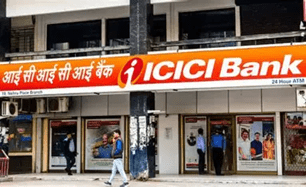

ICICI Bank, India’s second-largest private sector lender, recently announced its financial results for the third quarter of FY26 (October–December 2025). The report revealed a 4% decline in standalone net profit year-on-year, largely due to a sharp increase in provisions. Despite this, the bank’s core operating performance remained steady, and asset quality continued to improve—a sign of stability in an otherwise challenging financial environment.
ICICI Bank Q3 FY26 Profit Snapshot
For the quarter ending December 31, 2025, ICICI Bank posted a net profit of Rs 11,318 crore, compared with Rs 11,792 crore in the same quarter last year. This decline of 4% reflects higher provisioning requirements that the bank had to make, as well as some treasury losses.
Although profits declined slightly, the core operating profit—which represents earnings from banking operations without extraordinary items—increased by 6% YoY to Rs 17,513 crore. This growth highlights the resilience of ICICI Bank’s fundamental business operations despite external pressures.
Net Interest Income Shows Steady Growth
Net interest income (NII), which is the difference between interest earned on loans and interest paid on deposits, increased 7.7% YoY, reaching Rs 21,932 crore in Q3 FY26, up from Rs 20,371 crore a year ago. The bank’s net interest margin (NIM), an important indicator of profitability on lending, stood at 4.30%, slightly higher than the 4.25% recorded in Q3 FY25 and consistent with Q2 FY26 levels.
Takeaway: Even though profits fell due to provisions, the bank’s lending business remains healthy, generating stable revenue.
Rising Operating Expenses and Provisions
One of the key reasons for the decline in net profit was a rise in operating expenses, which jumped 13.2% YoY to Rs 11,944 crore from Rs 10,552 crore in the corresponding quarter last year. A portion of this increase, Rs 145 crore, was attributed to provisions under the new Labour Codes, reflecting compliance costs for employee-related obligations.
Additionally, treasury operations had a negative impact on Q3 results. The bank recorded a treasury loss of Rs 157 crore, compared with a gain of Rs 371 crore in Q3 FY25. While treasury losses are part of normal banking operations, they temporarily weighed on overall profitability.
Provisions and Risk Management
Provisions, which are amounts set aside to cover potential loan defaults, rose sharply to Rs 2,556 crore, more than double compared with Rs 1,227 crore in Q3 FY25. This included an additional Rs 1,283 crore in standard asset provisioning for a segment of agricultural priority sector loans that did not fully comply with regulatory requirements set by the Reserve Bank of India (RBI).
Explanation for readers: Provisions are like a safety buffer for banks. While they reduce immediate profit, they ensure long-term stability and reduce the risk of loan defaults impacting the bank’s health.
Core Operating Performance Remains Strong
Despite higher expenses and provisions, ICICI Bank’s core operating profit grew 6% YoY to Rs 17,513 crore. This growth was supported by:
- Steady growth in net interest income (NII)
- Higher fee income, driven by retail banking, card services, and investment banking activities
Lesson for investors: Strong core operations indicate that the bank’s main business model—lending and earning fees—is performing well, even if short-term profits fluctuate due to external factors.
Asset Quality Improves
One of the highlights of ICICI Bank’s Q3 results is the improvement in asset quality, which is a key indicator of how healthy a bank’s loan portfolio is.
- Gross NPA ratio: 1.53% (down from 1.58% in Q2 FY26 and 1.96% in Q3 FY25)
- Gross NPAs: Rs 23,758 crore (down from Rs 27,745 crore a year ago)
- Net NPA ratio: 0.37% (down from 0.39% in Q2 FY26 and 0.42% in Q3 FY25)
Explanation for readers: NPA (Non-Performing Assets) refers to loans where borrowers are unable to pay interest or principal. Lower NPAs indicate better loan quality and less risk for the bank.
This improvement shows that ICICI Bank’s lending practices are prudent, and its loan recovery processes are effective. Even during challenging times, the bank’s exposure to bad loans has decreased.
Domestic Loan Growth and Capital Adequacy
ICICI Bank’s domestic loan portfolio grew 11.5% YoY to Rs 14.31 lakh crore as of December 31, 2025. This growth was primarily in retail loans and priority sector lending, which reflects continued demand for banking services in India.
The bank’s capital adequacy ratios remain strong, ensuring it has enough capital to absorb potential losses:
- Total Capital Adequacy Ratio (CAR): 17.34%
- CET-1 Ratio: 16.46%
Why it matters: Strong capital ratios indicate that the bank is well-prepared to handle economic shocks or unexpected loan defaults.
Stock Market Reaction
Ahead of the Q3 results, ICICI Bank’s shares ended at Rs 1,413 on the NSE, down 0.4% on Friday. Despite this small drop, the stock has gained over 15% in the past year, outperforming the Nifty 50, which returned under 11% during the same period.
Investor takeaway: Short-term fluctuations in stock price are normal. Long-term performance of the bank is supported by strong fundamentals.
Real-Life Example: How Provisions Affect Profit
Imagine two friends, Chandan and Ganesh, both holding ICICI Bank shares:
- Chandan understands that higher provisions temporarily reduce profit but strengthen the bank’s long-term health. He holds his shares calmly.
- Ganesh sees the 4% profit drop and panics, selling his shares.
A year later, the bank continues to perform strongly, and Chandan benefits from long-term growth, while Ganesh misses out.

Lesson: Short-term profit declines due to provisions are not a sign of weakness, but a signal of responsible risk management.
Summary: Key Takeaways from ICICI Bank Q3 FY26
- Profit fell 4% YoY due to higher provisions, treasury loss, and operating expenses.
- Core operations are strong, with NII up 7.7% and core operating profit up 6%.
- Asset quality is improving, with gross NPA ratio declining to 1.53%.
- Domestic loans grew 11.5% YoY, reflecting strong demand.
- Capital ratios are healthy, showing the bank is well-prepared for future challenges.
- Stock price performance remains robust, with 15% gains in the last year.
Conclusion: ICICI Bank Remains a Strong Performer
While ICICI Bank’s net profit declined slightly, the results highlight the bank’s resilience and long-term stability. Growth in core operations, better asset quality, and strong capital ratios indicate that ICICI Bank is well-positioned to navigate economic uncertainties.
For investors, the key lesson is to look beyond quarterly profits and focus on long-term fundamentals. ICICI Bank’s disciplined provisioning, steady lending growth, and improved asset quality make it a strong candidate for long-term wealth creation.
Disclaimer
The information provided in this article is for educational and informational purposes only. It is based on publicly available data, including reports from Moneycontrol, and should not be considered as financial advice, investment recommendation, or endorsement.
Investors should do their own research and consult with a qualified financial advisor before making any investment decisions. Past performance of any stock or financial instrument is not indicative of future results.