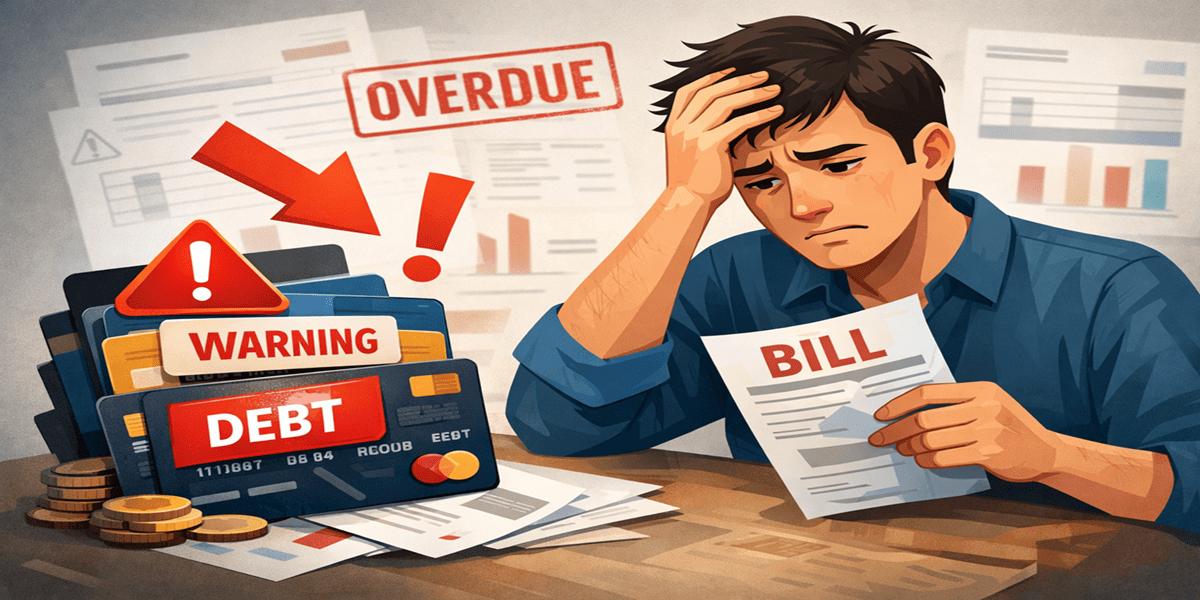

Credit cards are a convenient financial tool that can help you build credit, earn rewards, and manage expenses. However, misusing them can quickly lead to debt, financial stress, and a damaged credit score. Many people make simple mistakes with their credit cards without realizing the long-term consequences.
1. Missing Payments or Paying Late
Late payments are one of the most common mistakes that can damage your financial life.
Why it’s harmful:
- High-interest charges: Credit card interest rates can go up to 40% per year.
- Late fees: Banks charge fees that can add up quickly.
- Credit score impact: Payment history makes up 35% of your credit score. Late payments can lower it significantly.
Example:
Ravi missed his credit card payment once. His ₹10,000 balance attracted ₹500 in late fees, and interest started accruing immediately. Within three months, his debt increased to ₹11,200.
Tips to avoid:
- Set automatic payments for at least the minimum due.
- Enable reminders on your phone or email.
- Always know your billing cycle and due date.
2. Paying Only the Minimum Amount
Paying just the minimum balance might seem enough, but it can trap you in debt.
Why it’s harmful:
- Interest continues to accumulate on the remaining balance.
- Debt may take years to repay.
- You could pay double or triple the original purchase amount.
Example:
If you owe ₹50,000 at 24% interest and pay only ₹2,000 per month, it could take over 3 years to clear the debt, costing more than ₹20,000 in interest.
Tips:
- Always try to pay the full balance monthly.
- If not possible, pay more than the minimum.
- Consider balance transfer cards with lower interest rates.
3. Overspending Beyond Your Means
Credit cards can make you feel richer than you are, leading to overspending.
Why it’s harmful:
- Creates debt faster than your income can cover.
- Leads to stress and anxiety.
- Can result in defaults and permanent credit damage.
Example:
Sneha earned ₹40,000 per month but spent ₹80,000 on her credit cards. She could not repay the debt, and interest continued to grow, making it unmanageable.
Tips:
- Treat your credit card like cash, not free money.
- Stick to a monthly budget.
- Track all expenses carefully.
4. Ignoring Your Credit Card Statements
Many people never review their credit card statements. This can be very risky.
Why it’s harmful:
- Fraudulent transactions can go unnoticed.
- Billing errors may never be corrected.
- Spending habits remain unchecked.
Example:
Amit never checked his statements. A fraudulent transaction of ₹2,000 went unnoticed for 2 months, causing him extra stress and delayed refunds.
Tips:
- Review your statements monthly.
- Report errors immediately.
- Track spending to identify unnecessary expenses.
5. Opening Too Many Credit Cards at Once
Having multiple credit cards might seem advantageous, but it comes with risks.
Why it’s harmful:
- Each new card lowers your credit score temporarily.
- More credit cards tempt you to overspend.
- Managing multiple due dates and limits becomes difficult.
Tips:
- Keep 1–3 cards for most users.
- Apply for new cards only when needed.
- Choose cards that offer the best rewards and benefits for your lifestyle.
6. Using Credit Cards for Cash Advances
Cash advances from credit cards are very costly and should be avoided.
Why it’s harmful:
- High fees: Usually 2–3% of the withdrawn amount.
- Higher interest: Cash advances carry higher interest rates than purchases.
- No grace period: Interest starts immediately.
Example:
Rahul withdrew ₹10,000 from his credit card as a cash advance. The bank charged ₹300 fee and started interest immediately. After one month, he owed ₹10,500.
Tips:
- Avoid cash advances except in emergencies.
- Consider alternatives like personal loans.


7. Neglecting Your Credit Score
Credit cards affect your credit score significantly. Mismanagement can harm your financial credibility.
Why it’s harmful:
- Poor credit can result in high-interest loans or rejection for loans.
- Renting homes or insurance approvals may be affected.
- Long-term financial planning becomes difficult.
Tips:
- Pay on time.
- Keep credit utilization below 30%.
- Avoid opening too many new cards.
8. Ignoring Terms and Conditions
Not reading the fine print is another mistake many make.
Why it’s harmful:
- Hidden fees like annual fees, foreign transaction fees, or penalties can surprise you.
- Rewards and cashback rules may have restrictions.
- Misunderstanding interest calculation can lead to overspending.
Tips:
- Read all terms and conditions carefully.
- Keep a copy for reference.
- Ask your bank if any terms are unclear.
How to Use Credit Cards Wisely
- Budget wisely: Allocate a portion of your income for credit card use.
- Pay in full: Avoid interest by paying your full balance each month.
- Track spending: Use apps or statements to monitor expenses.
- Limit the number of cards: Manage only what you can handle responsibly.
- Educate yourself: Understand APR, fees, and rewards.
Real-Life Case Studies
Case Study 1: Overspending
Anita had 4 credit cards with a total limit of ₹2,00,000. She spent ₹1,50,000 in one month and paid only minimum balances. Her debt increased to ₹1,90,000 due to interest and penalties, and she had to negotiate repayment with her bank.
Case Study 2: Ignoring Statements
Raj never checked his statements. A fraudulent online purchase of ₹25,000 went unnoticed for 3 months. His bank initially declined a refund because it was reported late.
These examples highlight the real consequences of careless credit card usage.
Conclusion
Credit cards are a powerful tool for financial management, but misuse can ruin your financial life. Avoid mistakes like late payments, overspending, cash advances, ignoring statements, and neglecting your credit score. By using credit responsibly, you can build credit, earn rewards, and secure financial stability for the future.
Disclaimer
The information provided in this article is for educational and informational purposes only. It is not intended as financial, legal, or professional advice. Always consult with a qualified financial advisor or your bank before making decisions regarding credit cards, loans, or other financial products. TrendingAdda.in is not responsible for any financial losses or consequences arising from the use of this information.
Frequently Asked Questions (FAQs)
Can missing a single payment affect my credit score?
Yes, even one missed payment can lower your score and result in late fees.
Is it safe to use a credit card for daily expenses?
Yes, if you pay the full balance monthly. Otherwise, it can lead to debt.
How many credit cards are ideal?
1–3 cards are usually sufficient.
What happens if I only pay the minimum balance?
Interest accumulates, and repayment can take years.
Are rewards worth it?
Yes, if bills are paid on time and interest is avoided.
Are cash advances dangerous?
Yes, due to high fees and immediate interest.
How can I improve my credit score using a credit card?
Pay bills on time, keep balances low, and avoid opening multiple new cards.