
India’s latest Union Budget has been carefully designed to protect the economy from rising global uncertainties. With Indian exports under pressure due to steep US tariffs imposed during Donald Trump’s presidency and global trade disrupted by geopolitical tensions—from the Red Sea crisis to fragile critical mineral supply chains—the government has chosen a strategy focused on resilience rather than retaliation.
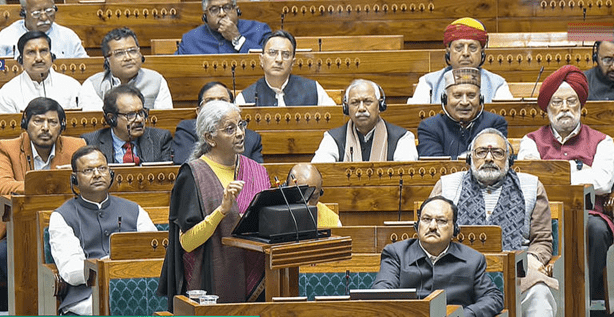
Finance Minister Nirmala Sitharaman has positioned the Budget as a shock absorber for jobs, manufacturing, and trade, aiming to cushion businesses and workers from external economic shocks.
Relief for SEZs to Prevent Job Losses
One of the most significant measures in the Budget is one-time relief for Special Economic Zones (SEZs). Manufacturing units in SEZs will now be allowed to sell a limited portion of their output in the Domestic Tariff Area (DTA) at concessional duty rates.
This move directly addresses the problem of capacity under-utilisation, which worsened after the US imposed 50% tariffs on key Indian exports last year. As exports became unviable, many SEZ units were pushed to the brink.
India currently has 370 SEZs employing over 31 lakh workers, largely in labour-intensive sectors. Over the last five years, 466 SEZ units have shut down, with closures accelerating as US-bound exports lost competitiveness.
Focus on Domestic Demand and Cost Relief
With goods exports contracting for two consecutive months, the Budget shifts attention toward domestic demand substitution. Measures such as:
- Customs duty cuts on key inputs
- Support for manufacturing clusters
- Targeted sector-specific schemes
are aimed at keeping factories operational and safeguarding employment until global trade conditions improve.
Textiles at the Core of the Strategy
The textile sector, one of the worst-hit by global trade disruptions, receives special attention. The Budget introduces an integrated modernisation programme covering:
- Fibre production
- Machinery upgrades
- Common testing and quality facilities
Textiles contribute around 12% of India’s total exports and employ millions, mostly through MSME clusters operating on thin margins. The government’s intent is clear: protect a sector critical for exports and employment.
Support for Labour-Intensive Export Sectors
Similar relief measures extend to other labour-heavy industries:
Seafood Exports
- Duty-free input cap raised from 1% to 3%, helping exporters offset higher foreign tariffs.
Footwear Industry
- Duty-free imports extended to shoe uppers, easing cost pressures on small manufacturers deep in the value chain.
These steps aim to stabilize sectors where even minor cost increases can trigger closures and layoffs.
Reducing Long-Term Strategic Vulnerabilities
Beyond immediate tariff challenges, the Budget addresses structural risks exposed by global geopolitics.
- A ₹10,000-crore container manufacturing scheme aims to reduce dependence on China.
- Duty exemptions introduced for:
- Defence MRO
- Batteries
- Solar glass
- Critical minerals
- Nuclear power components
These measures are designed to ensure long-term supply security while lowering production costs.
Market Reaction and Trade-Offs
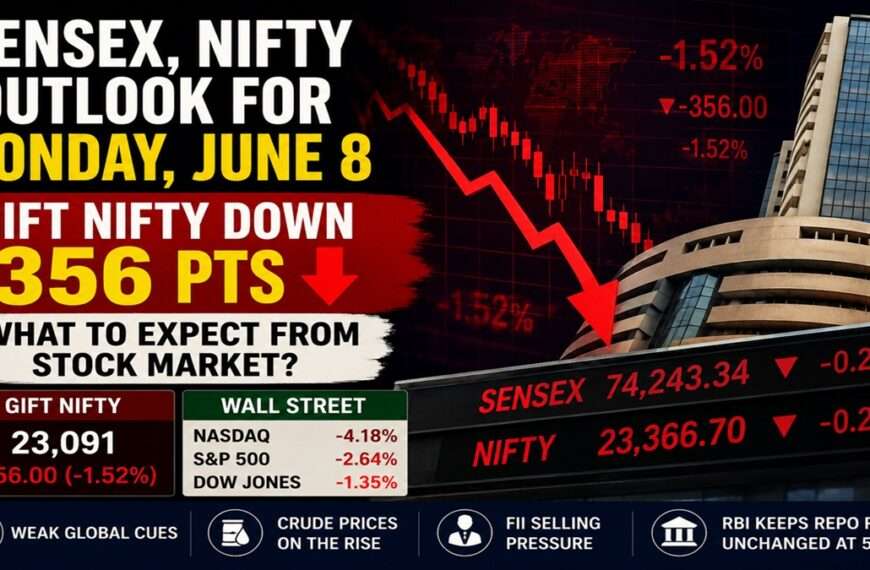
While the Budget focuses on stability, markets were reminded that reforms come with trade-offs. A sharp increase in Securities Transaction Tax (STT) on derivatives triggered a market sell-off, signalling the government’s intent to curb speculative excess—even at the cost of short-term volatility.
Conclusion:
Resilience Over Retaliation
Taken together, the Union Budget sends a clear message. As global trade fragments and protectionism rises, India is choosing resilience over retaliation. By using fiscal tools to protect jobs, preserve manufacturing capacity, and strengthen supply chains, the government aims to help the economy navigate an increasingly volatile global trade environment.
Disclaimer
This article is based on information and reports sourced from MNS. The content has been rewritten and presented for informational and educational purposes only. TrendingAdda.in does not claim ownership of the original news and does not guarantee the accuracy or completeness of the information. Readers are advised to verify details from official or primary sources.