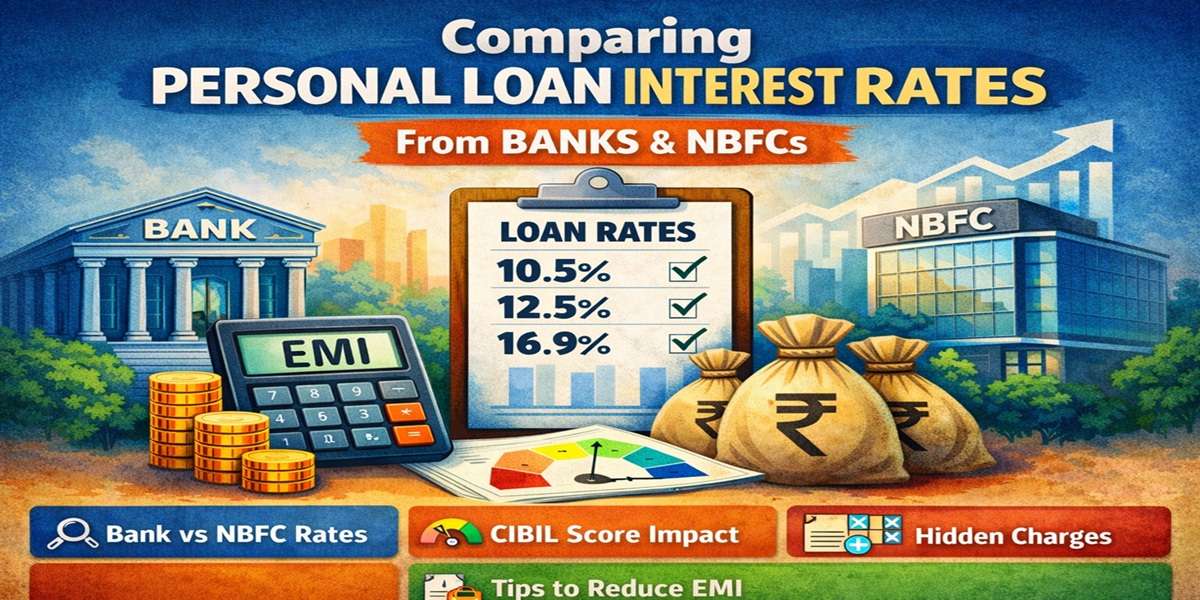
Taking a personal loan looks simple on the surface. No collateral. Fast approval. Money credited quickly. But behind that simplicity lies a long list of decisions that can quietly affect your finances for years.
Many people take personal loans during stressful moments — a medical emergency, a salary delay, mounting credit card bills, or an unexpected family expense. In those moments, speed feels more important than understanding. That’s exactly where mistakes happen.
This guide is written to slow you down just enough to make smart, informed decisions before signing that loan agreement.
What Is a Personal Loan?
A personal loan is an unsecured loan, meaning you don’t have to pledge gold, property, or any asset. Banks and NBFCs approve it mainly based on:
Your income
Your job stability
Your CIBIL score
Your repayment history
Because the lender takes more risk, interest rates are higher than home or car loans.
Real-Life Scenario: Why People Take Personal Loans
Let’s talk reality.
Example 1: Salary Delay
Rohit works in a private company. His salary got delayed for two months due to internal restructuring. Rent, EMIs, and household expenses didn’t wait. A personal loan looked like the easiest bridge.
Example 2: Medical Emergency
Anita’s father needed urgent surgery. Insurance covered part of it, but not everything. She didn’t want to break her long-term investments, so she took a personal loan.
Example 3: Credit Card Debt Trap
Vikas had three credit cards. Minimum payments kept increasing, interest crossed 40% annually. A personal loan helped him consolidate that debt at a lower rate.
Different reasons. Same product. Very different outcomes — depending on how well the loan was chosen.
1. Understand the True Cost of a Personal Loan
Most people look only at the interest rate. That’s a mistake.
What Actually Makes Up the Cost
Interest rate
Processing fees (1%–3% common)
GST on fees
Late payment charges
Prepayment or foreclosure charges
A loan advertised at 11% can quietly turn into 13%–14% effective cost.
👉 Always check the APR (Annual Percentage Rate) if available.
2. Interest Rate Depends on You (Not Ads)
Those “starting from 10.5%” ads? They’re for ideal borrowers.
Your interest rate depends on:
CIBIL score (750+ gets best rates)
Employer reputation
Existing loans
Credit utilization
Real Example:
Two colleagues earning ₹50,000/month applied for loans.
One had a 780 CIBIL → 11.25%
One had a 680 CIBIL → 17.9%
Same bank. Same salary. Very different EMI burden.
3. EMI: Comfort vs Pressure
Never choose EMI based only on approval eligibility.
A Safe Rule:
Your total EMIs should not exceed 30–35% of your monthly income.
Why? Because life happens:
Medical bills
Job changes
Family responsibilities
High EMIs leave no breathing room.
4. Loan Tenure: Short vs Long (Think Carefully)
Short Tenure
Higher EMI
Lower interest paid
More financial discipline required
Long Tenure
Lower EMI
Much higher total interest
Easy to overspend
Smart approach: Take a longer tenure for safety, but prepay whenever possible.
Chart 1: EMI vs Loan Tenure
What this chart shows (explain in blog):
Short tenure → High EMI, low interest
Long tenure → Low EMI, but higher total cost
Many people choose low EMI without realizing they pay much more interest
5. Processing Fees & Hidden Charges
Banks rarely highlight this upfront.
Typical charges:
Processing fee: 1%–3%
GST on processing fee
EMI bounce charges
Late payment penalties
Always ask for a loan amortization sheet before signing.
6. Prepayment & Foreclosure Rules Matter
Many borrowers assume they can close the loan early anytime.
Reality:
Some lenders allow prepayment only after 6–12 months
Charges can range from 2%–5%
Some NBFCs penalize part-prepayments too
If you expect future bonuses, incentives, or salary hikes — this point is critical.
7. Impact on Your CIBIL Score
A personal loan affects your credit score in both directions.
Positive Impact
Regular EMIs improve score
Shows credit discipline
Negative Impact
Missed EMIs (even 10–15 days late)
Multiple loan applications at once
High loan-to-income ratio
“It was only 10 days late — will it really make a difference?” Yes. Late payments are reported monthly and can hurt your score.
Chart 2: Impact of Loan Tenure on Total Interest Paid
What readers understand instantly:
1-year loan → lowest interest
5-year loan → interest almost 5× higher
Longer loans feel comfortable monthly, but are expensive overall
8. Personal Loan vs Credit Card Debt
Using a personal loan to close credit card debt can be smart — if done correctly.
Credit Card:
36%–48% annual interest
Minimum payment trap
Personal Loan:
11%–24% interest
Fixed repayment schedule
But here’s the catch: 👉 If you don’t control card spending after the loan, you’ll end up with both debts.
Personal Loan vs Credit Card: Which Is Better for Borrowing Money?
Comparison Table
Feature
Personal Loan
Credit Card
Interest Rate
Lower (10–18%)
Very High (30–45%)
Repayment
Fixed EMI
Flexible but risky
Best For
Large planned expenses
Short-term emergencies
CIBIL Impact
Medium
High if misused
Hidden Charges
Processing fee
Late fees + compounding
9. Fixed vs Floating Interest Rate
Most personal loans come with fixed rates, but some NBFCs offer floating options.
Fixed = stable EMI, peace of mind
Floating = risky during rising rate cycles
For salaried individuals, fixed is usually safer.
10. Loan Approval Speed vs Decision Speed
Instant loans are convenient — and dangerous.
App-based loans often have:
Higher interest
Aggressive recovery methods
Poor customer support
Speed should never replace understanding.
11. Check the Lender’s Reputation
Before signing:
Check RBI registration
Read Google reviews (not just app ratings)
Understand customer grievance process
Cheap loans from unreliable lenders can cost mental peace.
12. Personal Loan Is Not Free Money
This sounds obvious, but many forget it.
Every EMI:
Reduces monthly flexibility
Affects future loan eligibility
Adds mental pressure
Ask yourself honestly:
Is this loan a solution or a temporary escape?
13. When a Personal Loan Makes Sense
✅ Medical emergency ✅ Debt consolidation ✅ Short-term cash flow gap ✅ Skill upgrade or education
Borrowing for depreciating assets is a long-term regret.
15. Smart Checklist Before Applying
Before clicking “Apply Now”:
Compare at least 3 lenders
Calculate total repayment
Check foreclosure rules
Review EMI comfort
Read agreement terms (yes, really)
Top Reasons Loan Applications Get Rejected
Applying for a loan feels simple. You submit documents, fill a form, and expect approval. But when the rejection message comes, it hits hard — especially when you really needed the money.
What most people don’t realize is this: 👉 Loan rejection is rarely random. Banks and NBFCs follow strict internal rules, and even a small mistake can lead to rejection.
1. Low or Poor CIBIL Score
This is the number one reason for loan rejection in India.
Most banks prefer:
750+ → Smooth approval
650–749 → Possible, but risky
Below 650 → High chance of rejection
Real-life example
Rohit applied for a personal loan of ₹3 lakh. His salary was decent, but his credit card EMI was delayed by just 10 days twice last year. Result? CIBIL dropped to 635. Loan rejected.
Why banks care
Your CIBIL score shows:
Payment discipline
Credit behavior
Risk level
How to fix it
Pay all EMIs on time (even minimum dues)
Avoid frequent loan applications
Keep credit card usage below 30% limit
2. Unstable Income or Job Profile
Banks don’t just see how much you earn — they see how stable it is.
Red flags for banks:
Frequent job changes
Less than 6 months in current job
Irregular freelance income
Cash salary without proof
Example
Amit earns ₹45,000/month but changed 3 jobs in 1 year. A bank rejected his loan due to “employment instability”.
Fix
Complete at least 6–12 months in one job
Maintain salary credit in bank account
File ITR if self-employed
3. High Existing Loan Burden
If too much of your salary already goes into EMIs, banks get nervous.
Ideal rule banks follow:
Total EMI ≤ 40–50% of monthly income
Example
Monthly income: ₹30,000 Existing EMIs: ₹14,000 New loan EMI: ₹5,000
Neha used 90% of her card limit regularly. Even with no defaults, her loan got rejected.
Fix
Keep utilization below 30–40%
Pay full bill whenever possible
Avoid cash advances
5. Incomplete or Incorrect Documents
A very common yet ignored reason.
Common mistakes:
Mismatch in name/address
Old Aadhaar address
Wrong employer details
Unclear bank statements
Fix
Update KYC details
Submit latest salary slips
Ensure address consistency across documents
6. Too Many Loan Enquiries
Every time you apply for a loan, your credit report records an enquiry.
What goes wrong
Applying to:
5 banks
3 apps
2 NBFCs
👉 Looks desperate → credit score drops
Fix
Apply only where eligibility is high
Check pre-approved offers first
Maintain 3–6 months gap between applications
7. Low Age or Very High Age
Banks prefer borrowers in a safe earning window.
Too young (below 21): No credit history
Too old (near retirement): Repayment risk
Fix
Build credit early with small loans/cards
Choose shorter tenure if near retirement
8. Loan Purpose Considered Risky
Some purposes are flagged as high risk:
Debt consolidation without plan
Gambling or speculative investments
Unclear end-use
Fix
Be honest but practical:
Medical emergency
Education
Home renovation
Business expansion
9. Self-Employed Without Proper Records
Cash income without proof is a big red flag.
Banks need:
ITR (2–3 years)
GST returns (if applicable)
Business bank account
Fix
Start filing ITR early
Maintain clean bank records
Separate personal and business expenses
10. Previous Loan Settlements or Write-offs
Even if old, these heavily damage trust.
Settlement ≠ Closure
Banks treat settlements as partial defaults.
Fix
Avoid settlement unless unavoidable
Rebuild credit slowly over time
Use secured loans to recover trust
How to Improve Your Loan Approval Chances in 30 Days
Getting a loan rejected feels personal — as if the bank is judging you. In reality, banks don’t judge emotions. They judge numbers, patterns, and risk.
The good news? 👉 Most loan rejections can be fixed within 30 days if you know what to work on and what to avoid.
First, Be Clear: Can Loan Approval Really Improve in 30 Days?
Yes — but not magically.
You won’t jump from a CIBIL score of 550 to 800 in a month. But you can:
Remove red flags
Improve your risk profile
Increase approval probability significantly
Banks mainly look at recent behavior, not just history.
Week 1: Fix the Biggest Red Flags Immediately (Days 1–7)
1. Pay All Pending EMIs and Credit Card Dues
Even one unpaid EMI can ruin your chances.
Real-life example
Suresh’s personal loan was rejected because his credit card bill of ₹3,200 was overdue by 12 days. He cleared it immediately. Within 3 weeks, his next application was approved.
Apply for 20–30% lower amount than eligibility. You can top-up later.
Disclaimer
This article is for educational purposes only. Loan eligibility, approval, and interest rates depend on individual financial profiles and lender policies. Readers are advised to consult banks or certified financial advisors before making borrowing decisions
Can a 10-day EMI delay cause loan rejection?
Yes. Even short delays reflect poor discipline and can reduce CIBIL.
How long should I wait before reapplying?
Ideally 3–6 months, after fixing the rejection reason.
Does salary amount guarantee approval?
No. Stability and credit behavior matter more than salary.
Can self-employed people get loans easily?
Yes, with proper ITRs and income proof.
Does loan rejection affect CIBIL?
The rejection itself doesn’t, but multiple enquiries do.
what is a steroid hormone definition
References:
https://www.recruit-vet.com/employer/was-ist-wachstumshormon-hgh-und-wie-beeinflusst-es-den-muskelaufbau/?/








 merge battle cars idle tycoon says:
  https://body-positivity.org/groups/menschliches-wachstumshormon-hgh-wie-es-funktioniert says:
  https://avicounsel.com says:
  http://zenithgrs.com/ says:
  elclasificadomx.com says:
  jobs.foodtechconnect.com says:
  lejournaldedubai.com says:
  rater.in says:
  https://www.recruit-vet.com/employer/was-ist-wachstumshormon-hgh-und-wie-beeinflusst-es-den-muskelaufbau/?/ says:
  https://ashkert.am/աշկերտի-համար/wachstumshormone-hgh-kaufen-authorized-somatropin-bestellen says: